In most states, points don’t come “off” your license the way you’d expect. There’s no “delete” button. Once a ticket becomes a conviction, those points stay on your record for 1–10 years. For minor traffic violations, they usually expire after 2–3 years.
What you can do is choose the right path for your situation. Depending on where you live, a state-approved defensive driving course can reduce or mask your points. If you have grounds to fight the ticket, contesting it before conviction can stop points from being added at all. And if neither option fits, waiting out your state’s lookback window is always on the table.
This guide covers all three paths: what each one does to your record, how the rules vary by state, and what it means for your insurance premiums. Let’s dive in.
Point removal vs. reduction vs. masking: What’s the difference?
Depending on your state’s laws, you can remove, reduce, or mask the points tied to a traffic ticket. The goal is to limit their impact on your record and keep your insurance premiums from climbing.
- Point removal is the closest thing to a clean slate, but few states allow it. Generally, it’s only possible after a long period of staying violation-free or through an expungement process that varies by jurisdiction.
- Point reduction means the number of points on your record goes down. Completing a driver improvement or defensive driving course, fighting the ticket in court, or negotiating a lesser charge can all reduce your point total. The underlying conviction still shows on your record—only the point count changes.
- Point masking means the points remain on your record but don’t count toward license suspension. Some states, including California, allow drivers to mask points through traffic school. Upon course completion, the conviction is recorded at the court level, but the point is hidden from your driving record, preventing insurers from using it to raise your premiums.
The table below breaks down the rules for ten states, including every state where Traffic Safety Institute (TSI) operates, so you can see where you stand before deciding on a path.
| State | License Suspension Threshold | Points Expire After | Course Option | Course Frequency |
|---|---|---|---|---|
| California | 4 points within 12 months 6 points within 24 months 8 points within 36 months | 39 months* | Point masking via traffic school | Once every 18 months |
| Florida | 12 points within 12 months 18 points within 18 months 24 points within 36 months | 5 years | Point removal via a Basic Driver Improvement (BDI) course** | Once every 12 months or up to eight times in a lifetime. |
| Texas | 4+ moving violations within 12 months 7+ moving violations within 24 months | N/A (Texas no longer uses a points system) | Keeping points off via a defensive driving course | Once every 12 months |
| Virginia | 18 points within 12 months 24 points within 2 years | 24 months | +5 safe driving points via a driver improvement clinic*** | Once every 24 months |
| Nevada | 12 points within 12 months | 12 months | Point reduction via traffic school | Once every 12 months |
| New York | 11 points within 24 months | 24 months | Point reduction via a defensive driving course**** | Once every 18 months for point reduction Once every 36 months for insurance discounts |
| Georgia | 15 points within 24 months | 24 months | Point reduction via a Driver Improvement (defensive driving) course | Once every 5 years |
| South Carolina | Your license is automatically suspended when you accumulate 12 demerit points | 24 months (point count reduced by half after one year from the violation date) | Point reduction via a defensive driving course | Once every 3 years |
| Colorado | 12+ within 12 months 18+ within any 24 months (age 21+) | 24 months | Point reduction via a traffic safety school (when offered as part of a plea bargain) | Once every 18 months |
| Utah | 200+ within 36 months (age 21+) | 36 months 24 months if you remain violation-free | Point reduction via a defensive driving course | Once every 3 years |
Note that Colorado doesn’t have a statewide traffic school program. Because of that, course approval, eligibility rules, how often you can enroll, and other aspects vary by jurisdiction.
How to get points off your license by completing a state-approved course
Regardless of what your state calls it—traffic school, driver improvement, defensive driving, or something else—the process is similar across states. You enroll in a state-approved course, complete it before the deadline, and the school reports your completion directly to the court or relevant agency, such as the Department of Motor Vehicles (DMV).
The exact steps and legal outcome vary by state. Here are a few examples.
Florida BDI
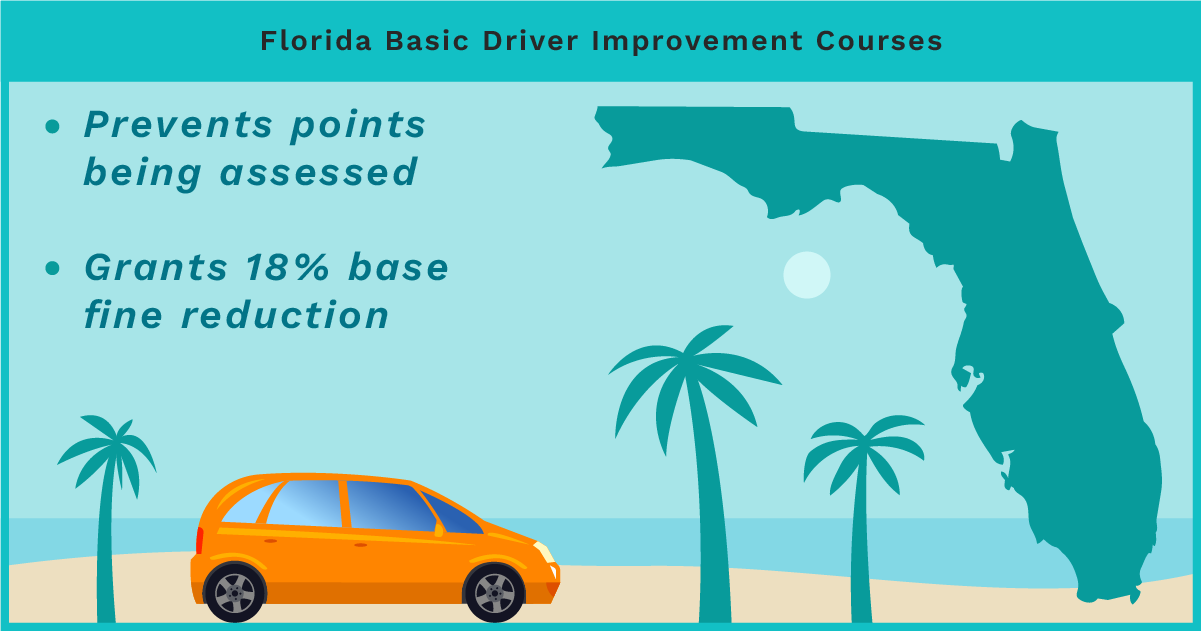
Floridians charged with minor moving violations can voluntarily take a Basic Driver Improvement course to prevent points from being assessed and receive an 18% reduction in the base fine. The course is four hours long and can be completed online or in person.
You must elect this option within 30 days of the citation date. Choose a BDI course approved by the Florida Department of Highway Safety and Motor Vehicles (FLHSMV) and complete it before the court’s deadline.
At Traffic Safety Institute (TSI), we offer a fully online, self-paced FLHSMV-approved BDI course. It’s currently accepted by Palm Beach County courts and can also be used for qualifying statewide FLHSMV notices, such as those issued for running a red light or passing a school bus. If your ticket came from West Palm Beach or elsewhere in the county, our page on traffic school in West Palm Beach explains the Clerk’s steps.
Texas driving safety courses
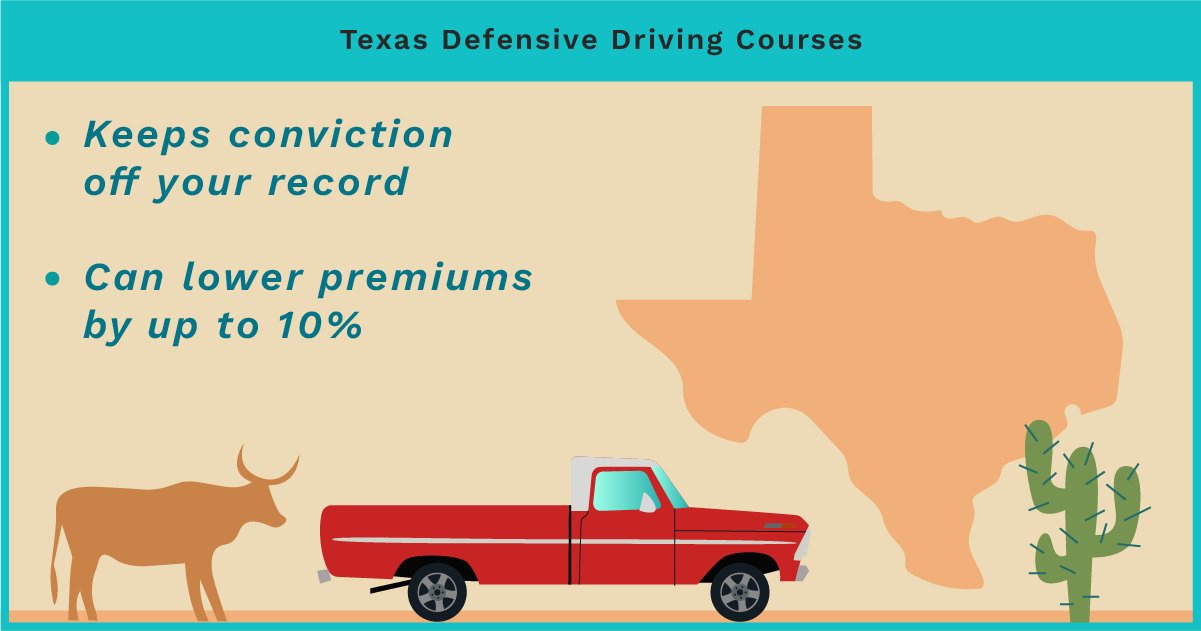
In Texas, you can complete a defensive driving course to keep points off your record. Also known as a driving safety course, it takes six hours and, unlike in most other states, doesn’t require a final exam.
The state repealed its points system in 2019, but that doesn’t mean a ticket is harmless. The conviction still goes on your driving record, affects your insurance rates, and can contribute to license suspension if you commit four or more moving violations within 12 months.
A driving safety course approved by the Texas Department of Licensing and Regulation (TDLR) can keep the conviction off your record. Most minor moving violations qualify, but you must request this option from the court before the due date on your ticket.
Even if you have a clean driving record, you can still take the course for insurance savings. Upon completion, most carriers will lower your premiums by up to 10% for three consecutive years.
California traffic school
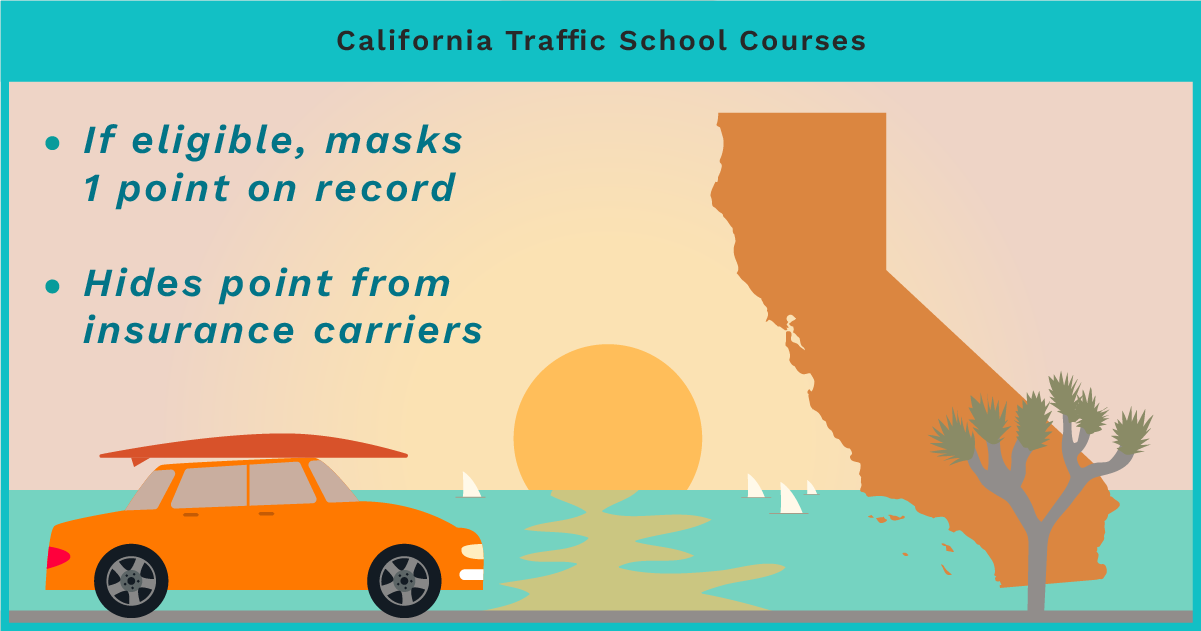
In California, completing a DMV-approved traffic school course allows eligible drivers to mask one point on their record. This option is available once every 18 months and applies only to traffic infractions, such as running a stop sign or failure to yield.
In-person courses take eight hours. Online traffic schools don’t use timers, so you can work through the material at your own pace. The California Traffic School course, offered through our sister school Best Online Traffic School, is DMV‑licensed and can be completed in as little as two to three hours.
After you finish, the point tied to your ticket is hidden from insurance carriers, helping you avoid a premium increase. Plus, it doesn’t count toward California’s suspension threshold, which may lower your risk of losing your license.
Virginia driver improvement clinics
In the Commonwealth of Virginia, the DMV uses a unique system that combines demerit points for violations with safe driving points for good behavior. Every year you drive without a conviction, you earn one safe driving point—up to a maximum of five.
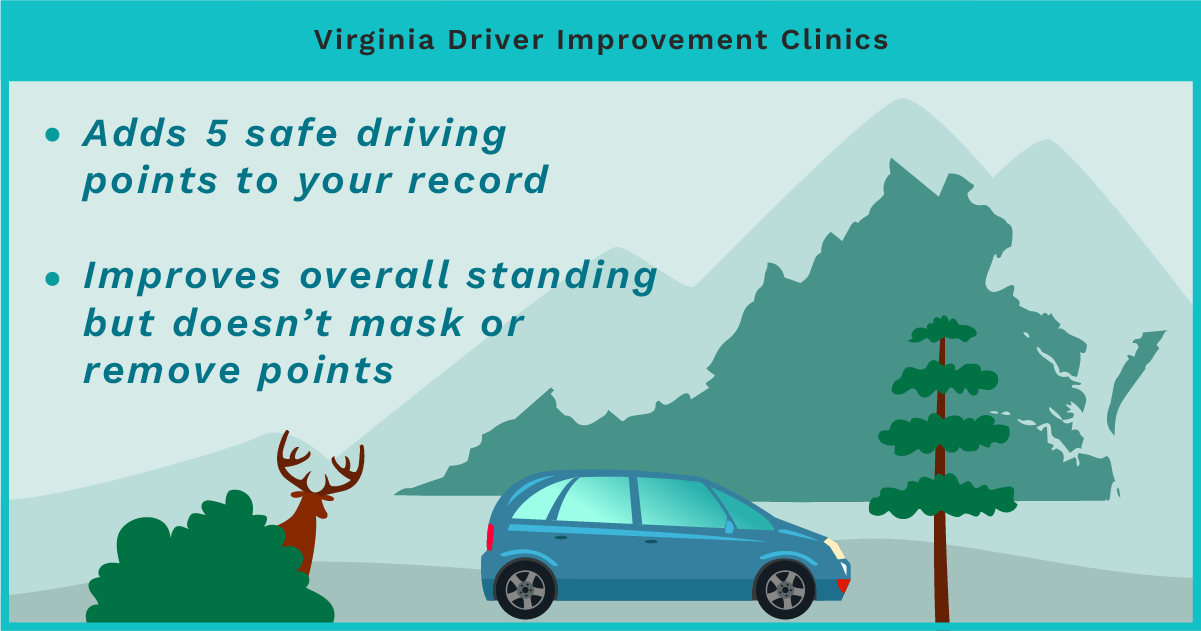
Completing a state-approved driver improvement clinic adds five safe driving points to your record. These points help offset future demerit points and improve your overall standing with the DMV. You can take the clinic voluntarily once every 24 months.
TSI’s Virginia Driver Improvement Clinic is DMV-approved, fully online, and eight hours long. You can complete it at your own pace in one sitting or spread out over several days, and the safe driving points are added once you finish.
Keep in mind that completing the course doesn’t erase or mask the underlying violation. Insurers can still see it and factor it into your premiums.
Nevada traffic safety school
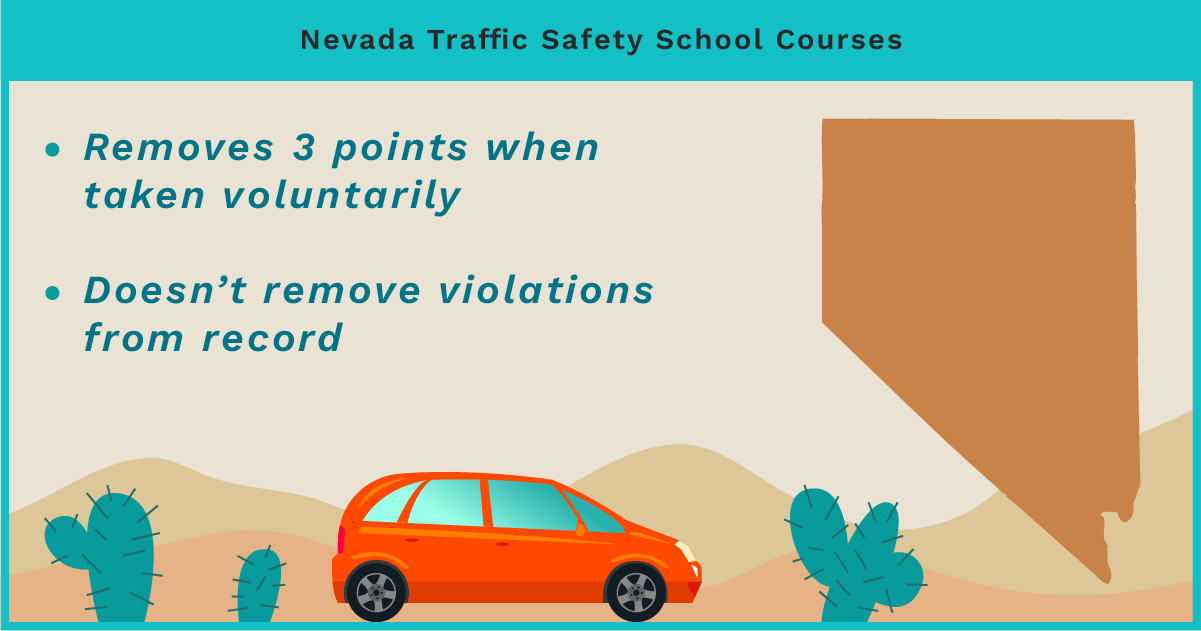
Nevada drivers with 3–11 points on their record can complete a DMV-approved traffic safety school course to remove three points. To qualify for point reduction, the course must be taken voluntarily, not as part of a court‑ordered plea bargain.
Traffic safety school requires a minimum of five hours for drivers with two or fewer violations and eight hours for those with three or more. At TSI, you can complete the five-hour course fully online, at your own pace, from any device.
Note that, just like in Virginia and several other states, completing the course doesn’t remove or mask the ticket. The violation remains on your driving record, so it may still affect your insurance costs.
Not eligible for traffic school? Let your points age off
If you don’t qualify for a defensive driving or traffic school course, waiting is always an option. Every state’s point system has a lookback window, and once a violation falls outside that window, it no longer counts toward your suspension threshold.
For example, under Nevada law, demerit points expire 12 months from the conviction date. The violation remains on your driving record permanently, but any expired points no longer contribute to a potential suspension.
Insurance companies typically look back three to five years when calculating your premiums. So even if the points tied to a violation have expired, insurers can still see the underlying conviction and use it to justify higher rates.
Contest the ticket to avoid points altogether
Points are only added to your record after a conviction, which means contesting the ticket before that happens can help protect your record. If you have grounds to fight the citation, you can request a hearing and present your case in court.
In some states, such as California, you may also file a Trial by written declaration. This process involves submitting a written statement and supporting evidence online or by mail instead of appearing in front of a judge.
If you win, the court dismisses your case. The result? No conviction, no points, and no insurance increases.
On the flip side, you could lose the trial and have the violation added to your record. Hiring a traffic lawyer can improve your odds, especially for higher‑point violations where the stakes justify the cost. An attorney may also negotiate the charge down to a lesser offense that carries fewer or no points, even when outright dismissal isn’t possible.
Make sure you act fast. In most states, drivers have up to 30 days to respond to a citation. If you miss the deadline, you lose your right to request a trial and fight the charges.
Also, note that paying the fine without contesting is treated as a bail forfeiture, which carries the same weight as a conviction. The case is closed, the violation goes on your record, and any applicable points are assessed. If you want to avoid that outcome, you need to formally contest the ticket—not just leave it unpaid.
When traffic school is your best option
When it comes to keeping points off your record, traffic school often makes the most sense for minor offenses. It’s quick, convenient, less risky than going to trial, and more advantageous than waiting for points to age off.
Not sure what to do next? Here’s how to tell if a state-approved defensive driving or traffic school course is right for you:
- You got a ticket recently: Depending on the state, you have up to 30 days from the citation date to request traffic school. If that window is still open, a driving course is often the fastest path to remove, reduce, or mask points.
- You meet the eligibility requirements: In most states, defensive driving or traffic school courses are open to noncommercial drivers charged with minor moving violations.
- To qualify, you typically need a valid driver’s license, minimum liability insurance, and must not have taken a course for point reduction within the past year or more, among other requirements. If you check all the boxes, taking the course is often a safer bet than going to court—unless you have a strong case.
- You want to protect your insurance rates: A state-approved driving course can mask or reduce points before your insurer sees them at renewal, which is often the outcome drivers care about most.
- You’re approaching the suspension threshold: If you already have a significant number of points and risk losing your license, traffic school can give you breathing room while older violations age off your record.
- You want a fast, low‑effort solution: Online courses are self-paced and compatible with any device. Most drivers can complete them in a single sitting without taking time off work or appearing in court.
If all of the above apply to your situation, traffic school is likely your best move. Find a state-approved course at Traffic Safety Institute and get started in minutes.
Why choose Traffic Safety Institute?
Ready to take care of your points? Our state-approved courses are self-paced, flexible, and designed to fit your schedule. Study online from any device, listen to or read the content, and log in and out whenever you want without losing progress.
At TSI, we know you probably didn’t wake up excited to take a defensive driving or traffic school course. We can’t change that, but we can make the experience smooth, stress‑free, and genuinely useful for real‑world driving.
While each course has distinct features, certain perks are included across the board:
✅ Interactive, easy‑to‑follow lessons
✅ Free audio narration
✅ Free certificate processing
✅ Multi-device compatibility
✅ Save-and-resume progress
✅ Flexible login options
✅ 24/7 live chat support in 100+ languages
✅ Fast turnaround on certificates
TSI’s defensive driving and traffic school courses are currently approved in Nevada, Florida, Virginia, and Texas. Except for the Virginia Driver Improvement Clinic, you can start any of them for free and pay only after you pass.
Drivers nationwide have left us over 28,282 reviews, with an average rating of 4.92. Most find our courses accessible, straightforward, and surprisingly easy to get through—exactly what you want when dealing with a ticket.
Don’t let points add up and raise your insurance premiums. Take a state‑approved course through Traffic Safety Institute and start improving your record today.
FAQs about keeping points off your driving record
Looking for more information on how to keep points off your driving record? Here are the answers to some frequently asked questions.
Does traffic school erase the ticket from my record?
Not in most states. Completing a state-approved course can remove, reduce, or mask the points tied to a violation, but the ticket usually stays on your driving record. What changes is how the points are counted, or whether they’re counted at all.
One exception is Texas, where completing a driving safety course can lead to ticket dismissal. In that case, the conviction never appears on your record.
Does point reduction result in lower insurance premiums?
It depends on your state and insurance carrier. Generally, traffic school prevents points from triggering a rate increase in the first place.
Some states require insurers to offer discounts for completing an approved course. For example, New York drivers who complete a defensive driving course, or Point and Insurance Reduction Program (PIRP), are entitled to a 10% auto insurance discount for three consecutive years.
Can I take a course in a different state from where I got the ticket?
Generally, no. You must complete a course approved by the state that issued your citation, not the state where you live.
If, say, you’re a Nevada resident who got a ticket in Florida, you’d need to complete an FLHSMV-approved BDI course to prevent points from being added to your record. Always confirm with the issuing court or DMV before enrolling.
How do I know how many points are on my record right now?
You can check your driving record through your state’s DMV website. Most states offer online access, either free or for a small fee.
In California, you can request your record online through the DMV for $2. In Texas, records are available through the Department of Public Safety (DPS) for $4 to $20. Alternatively, visit a local DMV office to get a physical copy.
How long does it take for points to be removed, reduced, or masked after I complete traffic school?
The timeline depends on your state and the court’s policies. In most cases, the course provider submits your completion certificate to the relevant agency within 1–30 days after you finish. You may also need to submit certain documents to the court yourself.
From there, processing can take anywhere from a few days to several weeks. If you have a court date or insurance renewal coming up, check your provider’s reporting timeline before you enroll.