The best online defensive driving course is the one you can complete at your own pace without stressing over hidden fees or certificate delays. It also has to be accepted by your court or insurer, depending on whether you want to dismiss a ticket, qualify for insurance discounts, or keep points off your record.
In many states, defensive driving and traffic school are the same thing, with hundreds of providers competing for your business. To cut through the noise, we reviewed six companies offering state-approved courses across the U.S.
For each one, we looked at licensing status, true cost, course length, certificate delivery speed, and whether you can pay after you pass. Here’s what we found, plus a few things you should know before you sign up.
How to choose an online defensive driving course
Defensive driving courses vary in quality, duration, delivery mode, and other features that shape your learning experience. Price matters too, but it shouldn’t be the only deciding factor.
With that in mind, here’s what to consider before you enroll:
- State approval: Look for defensive driving courses approved by your state’s Department of Motor Vehicles (DMV) or other relevant regulatory agency. In Texas, for example, all providers must be accredited by the Texas Department of Licensing and Regulation (TDLR). Without that approval, your completion certificate won’t be recognized.
- Use‑case approval: Make sure the course is approved for your specific purpose, such as ticket dismissal, point reduction, or insurance discounts. Depending on the state, each use case may require a different course, even within the same jurisdiction.
- True total cost: The advertised price isn’t always what you pay. Some providers charge separately for audio narration, certificate filing, practice tests, or other features. Add those up before you commit.
- Time to complete: Most states set a minimum course length, such as four hours for Florida’s Basic Driver Improvement (BDI) course or eight hours for the Virginia Driver Improvement Clinic. Every provider must meet that requirement. What varies is how the course is structured and whether you can study at your own pace or must follow a fixed schedule.
- Certificate delivery speed: Choose a provider that reports your completion to the court or DMV on time. If your state requires a physical certificate, make sure it’s delivered quickly. Delays can put you at risk of missing a court deadline, resulting in points on your license or additional penalties.
- Payment model: Some providers charge upfront, while others let you pay after you pass. The latter allows you to try the course before committing and removes the financial sting if something comes up and you don’t finish.
- Legitimacy signals: Look up the provider’s state license number, student reviews, and third-party ratings. Platforms like Trustpilot, Yelp, and Google Maps can give you a sense of customer satisfaction and course reliability.
The best online defensive driving courses compared
Our team researched and compared six of the most widely recommended online defensive driving courses. We included Traffic Safety Institute (TSI), our own school, but we evaluated it using the same standards applied to every other provider on this list.
For easy reference, we’ve focused our pricing and approval details on the four states where TSI operates: Florida, Nevada, Texas, and Virginia.
Let’s dive in.
| Provider | States Served | Price* | Certificate Delivery Included** | Payment Model |
|---|---|---|---|---|
| Traffic Safety Institute | FL, NV, TX, VA | $24.99 – $54.99 | ✅ | Pay after you pass (FL, NV, TX) Pay upfront (VA) |
| National Safety Council | AZ, CT, FL, IL, MA, MI, NE, NJ, NY, OH, OR, PA, VA, WA | ~$29.95–$150 | ✅ | Pay upfront |
| DriveSafe Online | All 50 states | ~$19.95–$47.95 | ✅ | Pay upfront |
| AARP (Smart Driver Course) | All 50 states, plus Washington, D.C., Puerto Rico, and the U.S. Virgin Islands | ~$15–$30*** | ✅ | Pay upfront |
| DefensiveDriving.com | TX, FL, NJ, CA | $8–$28 | ✅ | Pay upfront |
| DriveSafeToday | All 50 states, plus Washington, D.C. | ~$24.95–$54.95 | ✅ | Pay upfront |
* Prices vary by state and course type.
** Certificate delivery methods and timelines vary by provider and course type. Most providers, such as the National Safety Council, will issue your electronic certificate at no extra charge.
*** AARP members receive a discount on the course selected.
Note that course length varies by state and is the same for all providers. Depending on where you live, the minimum required duration is:
- Florida: 4 hours
- Texas: 6 hours
- Nevada: 5 hours
- Virginia: 8 hours
Now let’s take a closer look at each provider so you can make an informed decision.
Traffic Safety Institute (TSI)
Traffic Safety Institute offers state-approved defensive driving courses in Florida, Nevada, Texas, and Virginia. Our flat fee covers everything you need to complete the program, from study materials to certificate processing.
Best for: Drivers looking for a self-paced online course with engaging videos, clear instructions, and 24/7 live chat support. TSI is also a good fit if you want transparent pricing and want to see exactly what you’re paying for at checkout.
Price:
- Florida Basic Driver Improvement: $29.99
- Texas Driver Safety: $27.99
- Nevada Traffic School: $24.99
- Virginia Driver Improvement Clinic: $54.99
Certificate delivery: All courses include an electronic certificate. Where state systems support it, we file directly with your court or DMV at no extra charge. You can also choose to have a physical certificate mailed to you for an additional fee.
Standout feature: With most TSI courses, you don’t pay until you pass. In Florida and Nevada, that means passing the final exam. In Texas, it applies after completing the lesson quizzes. The Virginia Driver Improvement Clinic requires payment upfront.
Watch out for: TSI’s defensive driving courses are only available in four states. For California traffic school, see our partner school, Best Online Traffic School. If you’re in a state not covered by either, you’ll need to choose a different provider.
National Safety Council (NSC)
The National Safety Council is one of the oldest and most recognized names in driver safety, with courses approved in more than a dozen states. Some programs are also available in Spanish, which can be helpful if English isn’t your first language.
Best for: Drivers who want a self‑paced, fully narrated course from a long‑standing nonprofit, or those whose insurers specifically list NSC as an approved provider.
Price: $29.95-$150
Certificate delivery: In most states, NSC reports your completion to the DMV. You’ll also receive a digital certificate you can print and submit to the court or your insurance carrier as needed.
Standout feature: NSC’s defensive driving courses come with a 100% money-back guarantee. If you’re not satisfied with the course, you can request a full refund within 30 days of purchase as long as you haven’t completed it.
Watch out for: In some states, including Virginia, NSC charges an additional fee to issue your official certificate and report your completion to the DMV. Check what’s included for your state before you enroll.
DriveSafe Online
DriveSafe Online offers video‑based defensive driving courses in all 50 states. The lessons are delivered through fully narrated, bite‑sized videos with closed captions, and you can watch them on any device.
Best for: Drivers who want a fully video‑based, self‑paced course with flat‑rate pricing.
Price: ~$19.95-$47.95
Certificate delivery: Your completion certificate is delivered to your inbox immediately after you finish the course. This service is included in the course price.
Standout feature: DriveSafe Online’s courses use interactive video elements (e.g., in‑car and drone footage) to illustrate real‑world driving scenarios. For many students, video feels more engaging than text‑heavy or slide‑based formats.
Watch out for: Some students say the course didn’t save their progress, forcing them to restart sections and spend more time than expected. Others found the pace too slow, and a few flagged technical glitches like videos replaying over and over.
AARP Smart Driver Online Course
The AARP Smart Driver course can help you qualify for an auto insurance discount. You can complete it online or in a classroom setting. The online version features narrated content, videos, and illustrations.
Best for: Drivers looking for a simple way to lower their insurance premiums.
Price: ~$15-$30
Certificate delivery: Students in California, Louisiana, New York, and Nevada receive their completion certificate by USPS First‑Class Mail at no extra charge. Drivers in all other states receive an electronic certificate.
Standout feature: While open to drivers of all ages, the course is specifically designed for those 50 and older. A significant portion covers driving techniques and coping strategies for age-related changes, such as vision or hearing loss.
Watch out for: Many reviewers say the course takes longer than advertised (e.g., nine hours instead of six) and mention issues like repetitive content, irrelevant sections, and technical glitches.
DefensiveDriving.com
DefensiveDriving.com has been offering state-approved courses since 2000, serving drivers in Texas, Florida, New Jersey, and California. Florida residents can take the course in video format, while Texas drivers can choose between video and text. New Jersey and California students have access to text-based courses.
Best for: Budget-conscious drivers who want a no-frills course at a low price.
Price: $8-$28
Certificate delivery: Depending on your state, you’ll receive either an electronic certificate or a physical copy via standard mail at no extra charge.
Standout feature: DefensiveDriving.com backs its courses with a ticket‑dismissal guarantee of up to $250. If your ticket isn’t dismissed after you complete the course, they’ll reimburse you up to that amount—assuming you had court permission to take defensive driving and finished before the deadline.
Watch out for: Several drivers report unexpected charges, such as an additional $25 to download your certificate. Some say they ended up paying nearly double the advertised price because of add‑on fees.
DriveSafeToday
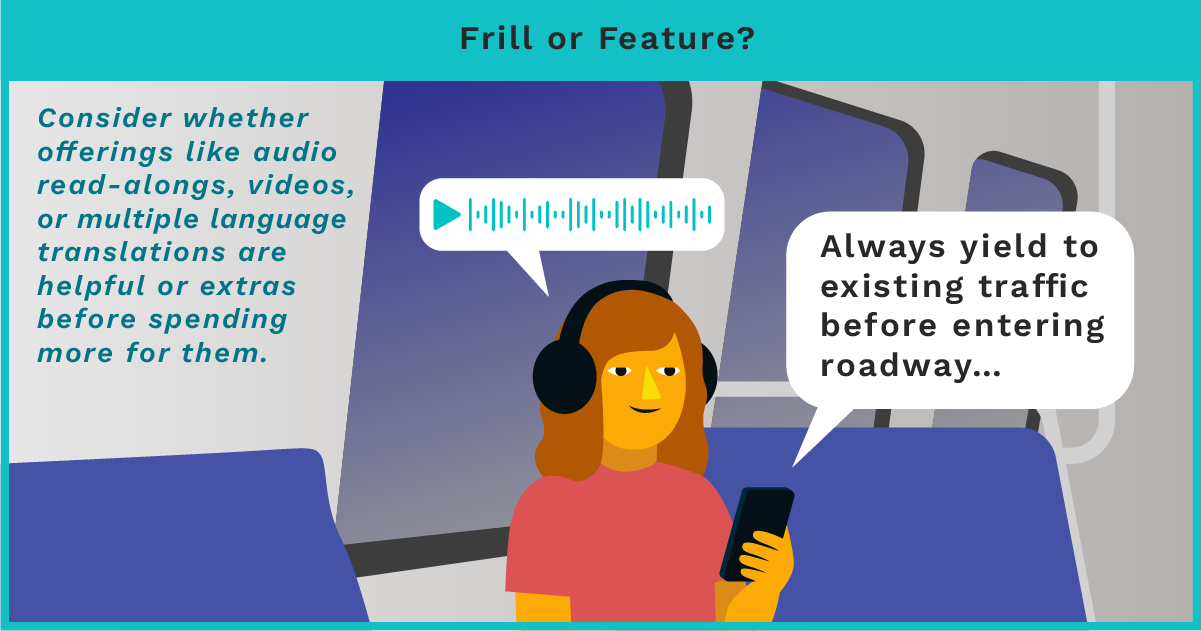
DriveSafeToday operates in all states and Washington, D.C., offering defensive driving courses for ticket dismissal, point reduction, or insurance discounts. Each course includes free audio narration and story-based scenarios drawn from real driving situations.
Best for: Drivers looking for an intuitive learning platform with multimedia content, mobile-friendly courses, and flat pricing.
Price: ~$24.95-$54.95
Certificate delivery: You can download your completion certificate after finishing the course. There are two exceptions: California students receive a completion receipt, and Missouri students get their certificate by USPS mail.
Standout feature: DriveSafeToday offers a full refund if you change your mind before starting the final exam. That gives you enough time to work through the course material and decide whether it’s right for you before committing.
Watch out for: In New York, Georgia, Massachusetts, and many other states, DriveSafeToday considers itself “unapproved,” meaning you’ll need explicit permission from your court or insurer before enrolling. If you skip that step and your certificate isn’t accepted, you won’t get a refund. Check the FAQ section on your state’s course page to confirm approval.
How does defensive driving work in your state?
Each state has different requirements when it comes to defensive driving, or traffic school. The legal outcome, eligibility criteria, minimum course length, and other aspects vary based on where you live.
Here’s a quick overview of what to expect in each of the four states covered by TSI, plus California, where we’ll point you to the right resource.
Texas
Texas residents can take driver safety (aka defensive driving) courses to dismiss a ticket. Many auto insurers also offer discounts of up to 10% for completing a state-approved program. The discount typically applies for three consecutive years.
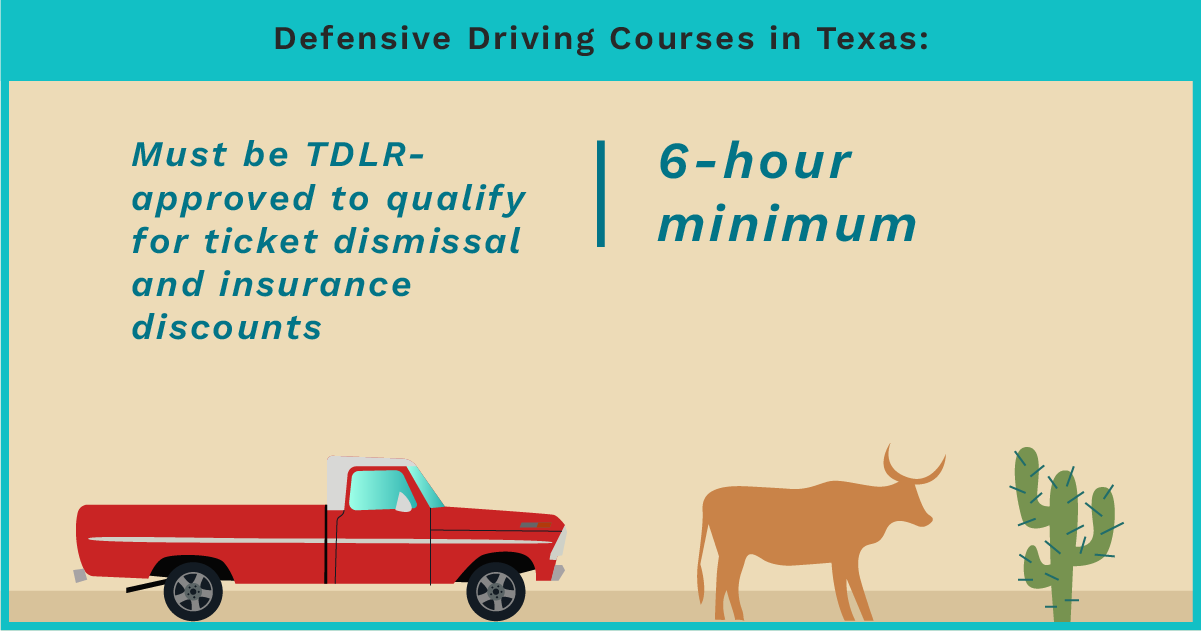
To qualify for ticket dismissal or insurance savings, you must select a course accredited by the TDLR. All TDLR‑approved driver safety courses are at least six hours long and can be taken no more than once every 12 months.
As for pricing, Texas law requires every provider to charge at least $25, plus a $3 state fee. That’s why legitimate driver safety courses start at $28.
Florida
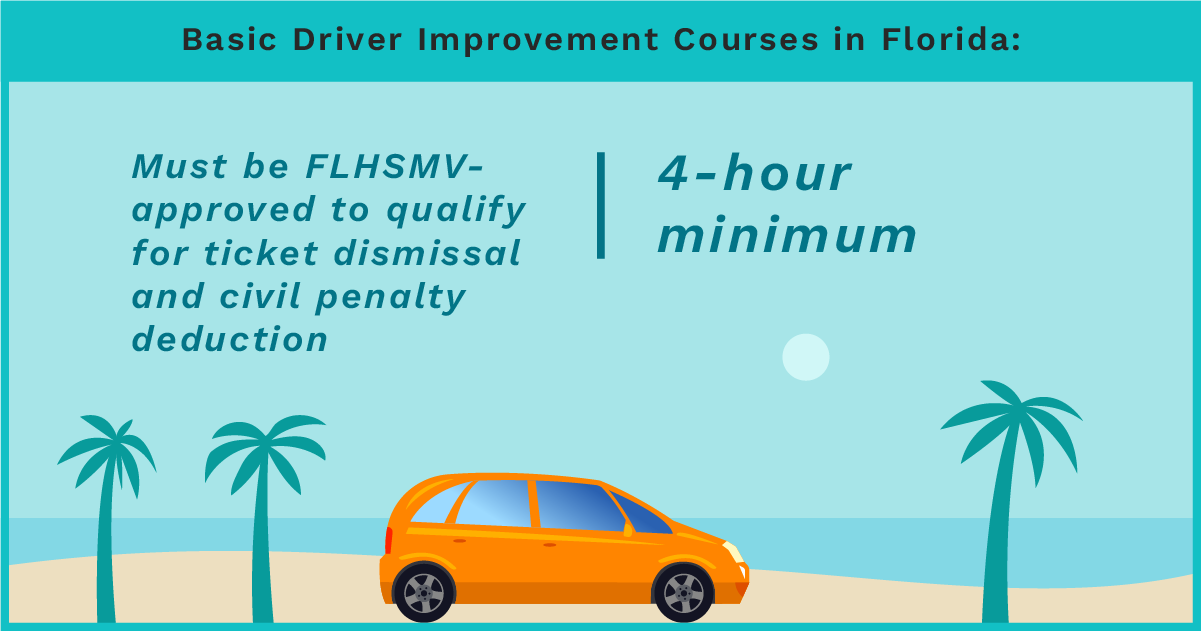
In Florida, you can take a Basic Driver Improvement (BDI) course for ticket dismissal. When you choose this option, you’ll also receive an 18% reduction on your civil penalty under Florida Statute §318.14.
To make sure your certificate is valid, select a course approved by the Florida Department of Highway Safety and Motor Vehicles (FLHSMV). Remember to check the FLHSMV’s list of accredited providers before you sign up.
The BDI course lasts four hours and can be taken voluntarily once every 12 months and up to eight times in a lifetime. In some cases, it’s mandatory—for example, if you’re found at fault for a crash resulting in bodily injury.
If you’ve been convicted of another traffic offense within 12 months of completing the BDI, you may need to take an eight-hour Intermediate Driver Improvement (IDI) course instead. And if your violations lead to license suspension or revocation, you’ll need to complete the Advanced Driver Improvement (ADI) program.
These longer courses are typically court‑ordered and don’t result in ticket dismissal or fine reduction.
California
Californians convicted of a one-point moving violation can attend traffic school to mask that point from their driving record. Common examples include running a red light or failing to yield to a pedestrian. Completing the course hides the conviction from auto insurers and other third parties, keeping your premiums from going up.
To be eligible, you must hold a valid California driver’s license, have received a qualifying citation, and get court approval before enrolling. You must also not have attended traffic school in the past 18 months.
In-person courses require at least eight hours of instruction. Online courses don’t use timers, so you can study at your own pace and finish in as little as two to three hours. Either way, make sure you choose a California DMV‑approved traffic school so your completion is recognized.
TSI doesn’t offer a course in this state, but you can take it through our partner, Best Online Traffic School. Start for free today.
Nevada
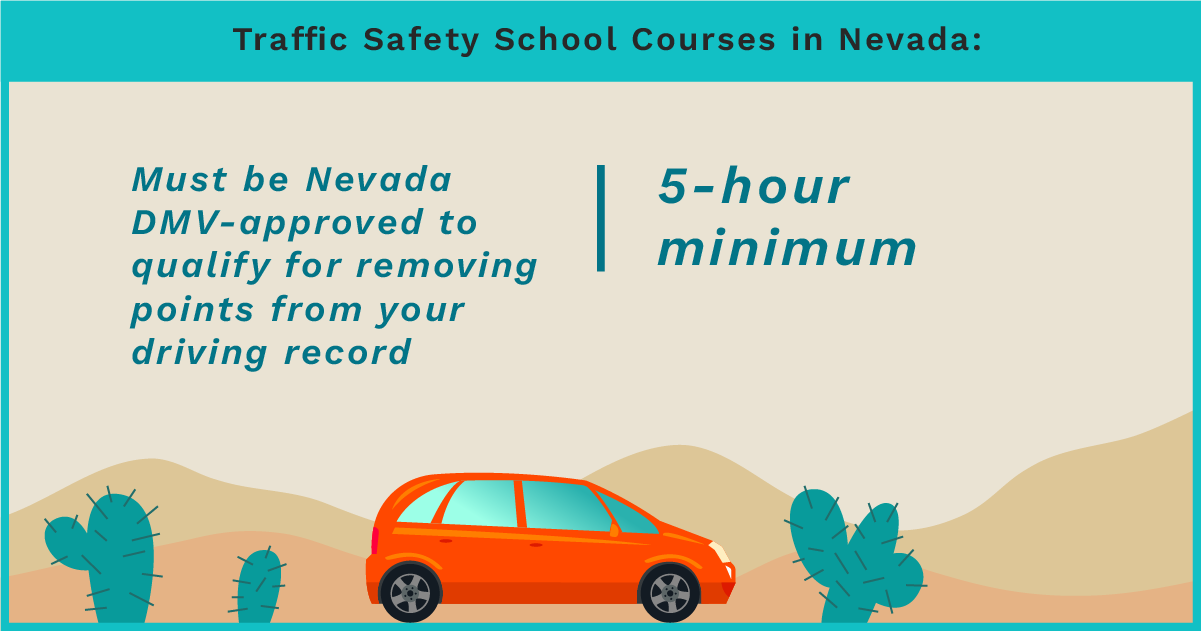
If you have 3–11 points on your DMV record, completing traffic safety school can remove three points and help you avoid license suspension or insurance rate hikes. Depending on your situation, the course may also be court-ordered or help you qualify for car insurance discounts.
Nevada traffic safety school has a minimum duration of five hours and can be taken no more than once every 12 months. Online and in-person courses both require the full five hours of instruction, but the online format lets you study on your own schedule.
Look for a provider licensed by the Nevada DMV—you can browse the full list of approved schools to research your options. TSI’s Nevada Traffic Safety School is among them.
Virginia
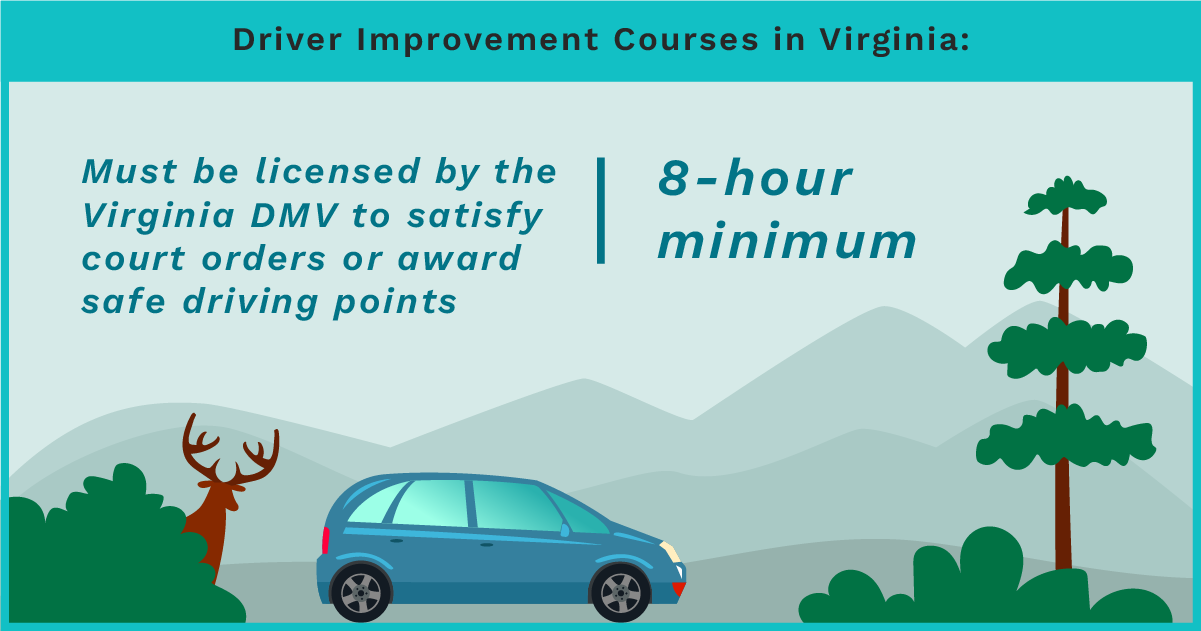
The Commonwealth of Virginia allows both residents and non-residents to take a driver improvement course for traffic offenses committed in the state. Below are the most common reasons you may need or want to complete this eight-hour course, along with the expected outcome.
- Court-ordered: If you take the course to fulfill a court order, you’ll earn up to five safe driving points. These act as a buffer against future violations, offsetting the demerit points you get for breaking traffic laws.
- DMV-required: If you accrue 12 demerit points within 12 months or 18 points within 24 months, the DMV will mandate a driver improvement course. Upon completion, you’ll be awarded up to five safe driving points.
- Insurance discounts: Some insurers will lower your premiums for completing the course. This option is generally available to drivers aged 55 and older. Note that if you take the course for insurance savings, you won’t also receive safe driving points.
- Voluntary: You can take the course voluntarily to earn safe driving points and improve your record.
If you’re taking the course voluntarily or for an insurance discount, you can do so no more than once every two years.
No matter your reason for enrolling, choose a provider licensed by the Virginia DMV. Browse the state’s list of approved driver training schools before getting started.
Are online defensive driving courses worth it?
Defensive driving often pays for itself by saving you hundreds or even thousands of dollars. You’ll still need to pay the fine, but completing a course can help you dismiss a ticket or keep points off your record, which in turn prevents insurance rate increases.
Still on the fence about it? A state-approved defensive driving course can deliver three clear benefits—and, in many cases, more than one at the same time:
- Insurance discounts: Most auto insurers offer a 5–10% discount to drivers who complete an approved defensive driving course. Depending on your insurer’s policies, the discount can lower your premiums for up to three years.
- Ticket dismissal or point reduction: In many states, taking a defensive driving course voluntarily can help you dismiss a ticket or reduce your point count. As a result, it may prevent license suspension and keep your insurance rates from rising after a violation.
- Become a safer driver: Defensive driving courses are designed to help you recognize and reduce risky behaviors behind the wheel. These skills could save your life and the lives of others.
The curriculum varies by state, but most courses cover collision prevention, speed management, emergency response, and dealing with aggressive drivers. The goal is to promote responsible driving behavior and refresh your knowledge of traffic laws. What you’ll learn can make you a safer, more confident driver, regardless of your age or experience.
Why choose Traffic Safety Institute?
The best online defensive driving course isn’t the one with the flashiest homepage or lowest price. Instead, look for a state-approved provider with transparent pricing, engaging lessons, and the flexibility to study on your own schedule.
That’s exactly what we set out to build at TSI. Our defensive driving courses are fully approved in Florida, Nevada, Texas, and Virginia, and accepted by most insurers in those states. In Florida, we’re accredited by Palm Beach courts and counties and approved for statewide department violations.
You can take our courses online from any device, including your smartphone. Study at your own pace, log in and out as needed, and test your knowledge with quizzes after each lesson.
Our flat fee covers everything you need to successfully finish the course. Here’s what’s included:
✅ Easy-to-follow lessons with multimedia content
✅ Free audio read-along
✅ Practice quizzes and progress tracking
✅ Screen-reader compatibility
✅ Free instant digital certificate
✅ 24/7 live chat support in 100+ languages
We also offer optional upgrades designed to save you time.
For example, Nevada students can opt for our notarized affidavit service, so they don’t have to track down a notary themselves. All add-ons are clearly listed at checkout, and you can deselect anything you don’t need before you pay.
The best part is, you don’t have to commit before you’re ready. With most TSI courses, you can start for free and pay only after you pass—no credit card required at sign-up.
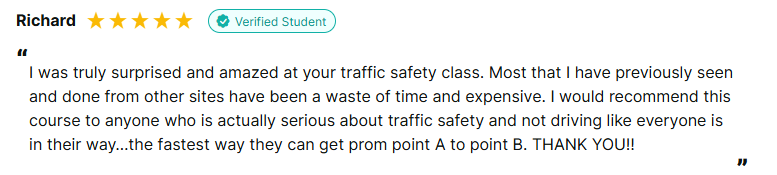
To date, we’ve received 28,282 with an average rating of 4.92. Students consistently praise the quality of our learning materials, describing them as helpful, detailed, and accessible.
Why not give it a try? Browse our defensive driving courses and choose one that best fits your needs. Get started today.
FAQs about finding the best online defensive driving course
Looking for more information on how to find the best online defensive driving course? Here are the answers to some questions you may have.
How can I tell if an online defensive driving course is legitimate?
Look for a state license number, third‑party ratings, and a meaningful number of student reviews on platforms like Trustpilot or Yelp. Most states also publish official lists of approved providers (usually on the DMV website), so check those directories to confirm the school you’re considering is licensed.
What’s the difference between defensive driving, traffic school, and a mature driver course?
In most states, defensive driving and traffic school refer to the same type of course, typically used for ticket dismissal or point reduction. Depending on where you live, you may also take the course to fulfill a court order or qualify for auto insurance discounts.
Mature driver courses fall into a different category. They’re designed for drivers aged 50 and older, and their primary purpose is to help you earn an insurance discount, not to clear a ticket or reduce your point count.
For example, Floridians aged 55+ can take TSI’s Mature Driver Improvement course to qualify for a 5–15% insurance discount, up to $300 per year. The course is FLHSMV‑approved and accepted by all insurance companies in the state.
Will my insurance company accept a certificate from an online defensive driving school?
Most major insurers accept certificates from state-approved providers, whether the course was completed online or in person. Before enrolling, contact your insurer to confirm they accept the course you’re considering and ask how long the discount will apply.
How long does it take to complete a defensive driving course?
Most programs take four to eight hours, depending on your state’s requirements. Online courses offer more flexibility than in‑person classes, allowing you to work through the material at your own pace.
Does a defensive driving course involve behind-the-wheel instruction?
Generally, no. State‑approved courses focus on theoretical instruction only. Some private schools offer optional driving practice, but those programs aren’t usually approved for ticket dismissal or point reduction.
Are there any hidden fees I should watch out for?
Many providers charge extra for audio narration, certificate filing, or even mobile access. These fees aren’t always clearly listed on the course page or at checkout, so read the fine print before you pay.