If you’re wondering how much does defensive driving lower insurance premiums, the short answer is 5% to 10% and, in some states, up to 20% per year. With the average full‑coverage premium around $2,434 per year, that works out to $121 to $486 in yearly savings, or $365 to $1,460 over a three‑year period.
The exact amount depends on where you live, how old you are, which insurer you’re with, and whether you’re taking the course voluntarily or as part of a court order.
Here’s what you should know about these factors, plus a clear walkthrough of how to qualify for and claim a defensive driving discount.
What actually determines your defensive driving discount
Completing a defensive driving course doesn’t guarantee lower premiums. How much you can save on auto insurance—or whether you save anything at all—depends on four factors:
- Your state’s laws: Some states require insurers to offer a defensive driving discount, while others leave it entirely up to the carrier. New York, for example, mandates a 10% reduction for three years when you complete the state‑approved Point and Insurance Reduction Program (PIRP).
- Your insurance carrier: Even in states where the discount isn’t required by law, many insurers offer it voluntarily. The percentage varies by carrier, and some cap it or exclude it if you already qualify for a safe-driver discount. Always confirm with your insurer before you enroll.
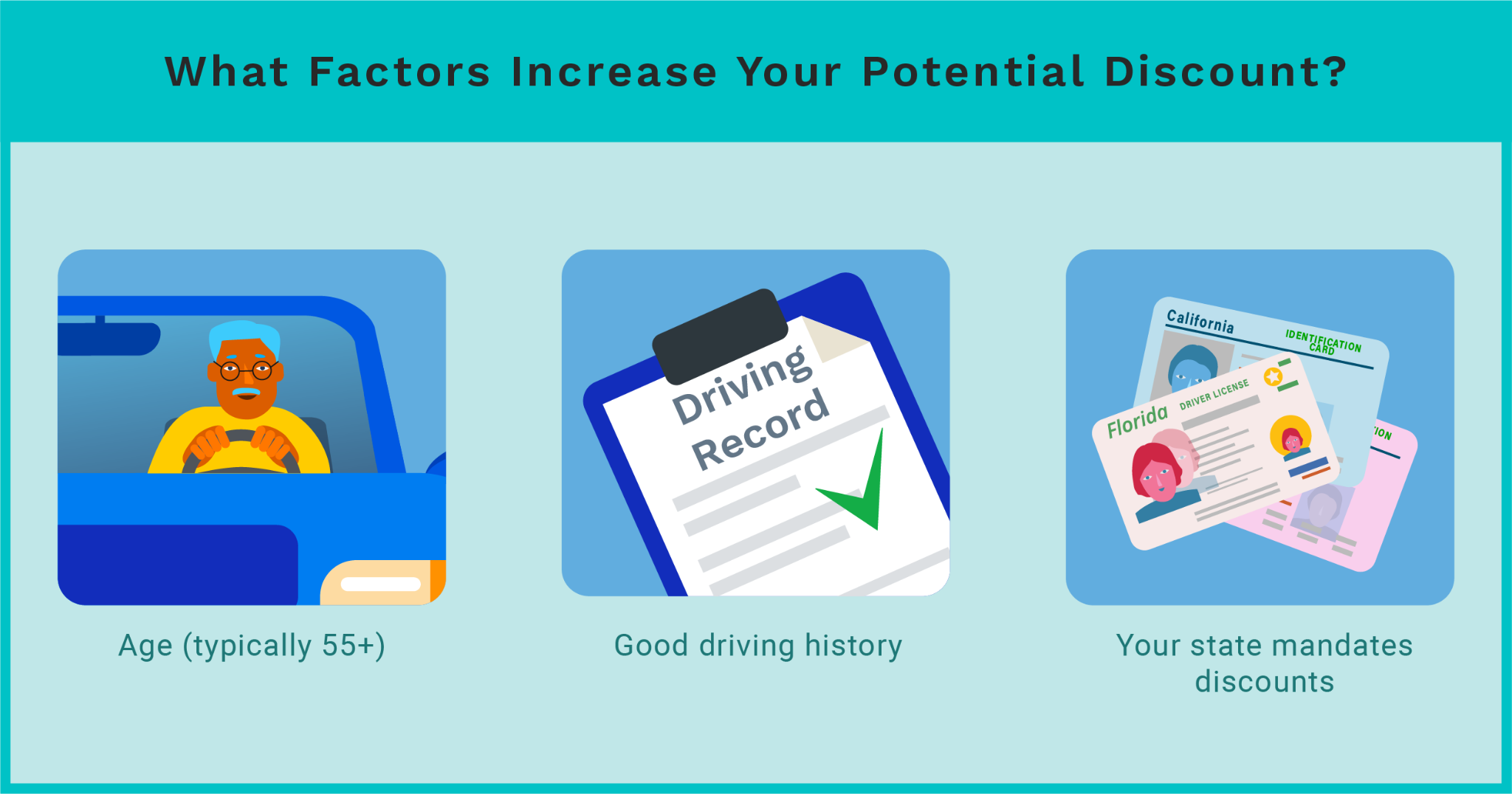
- Your age: Some insurers restrict the discount to drivers 55 and older, others extend it to all ages, and a few offer a larger discount to younger drivers as an incentive. Age eligibility varies by state and insurance provider, so it’s worth a quick call to your carrier to confirm where you stand.
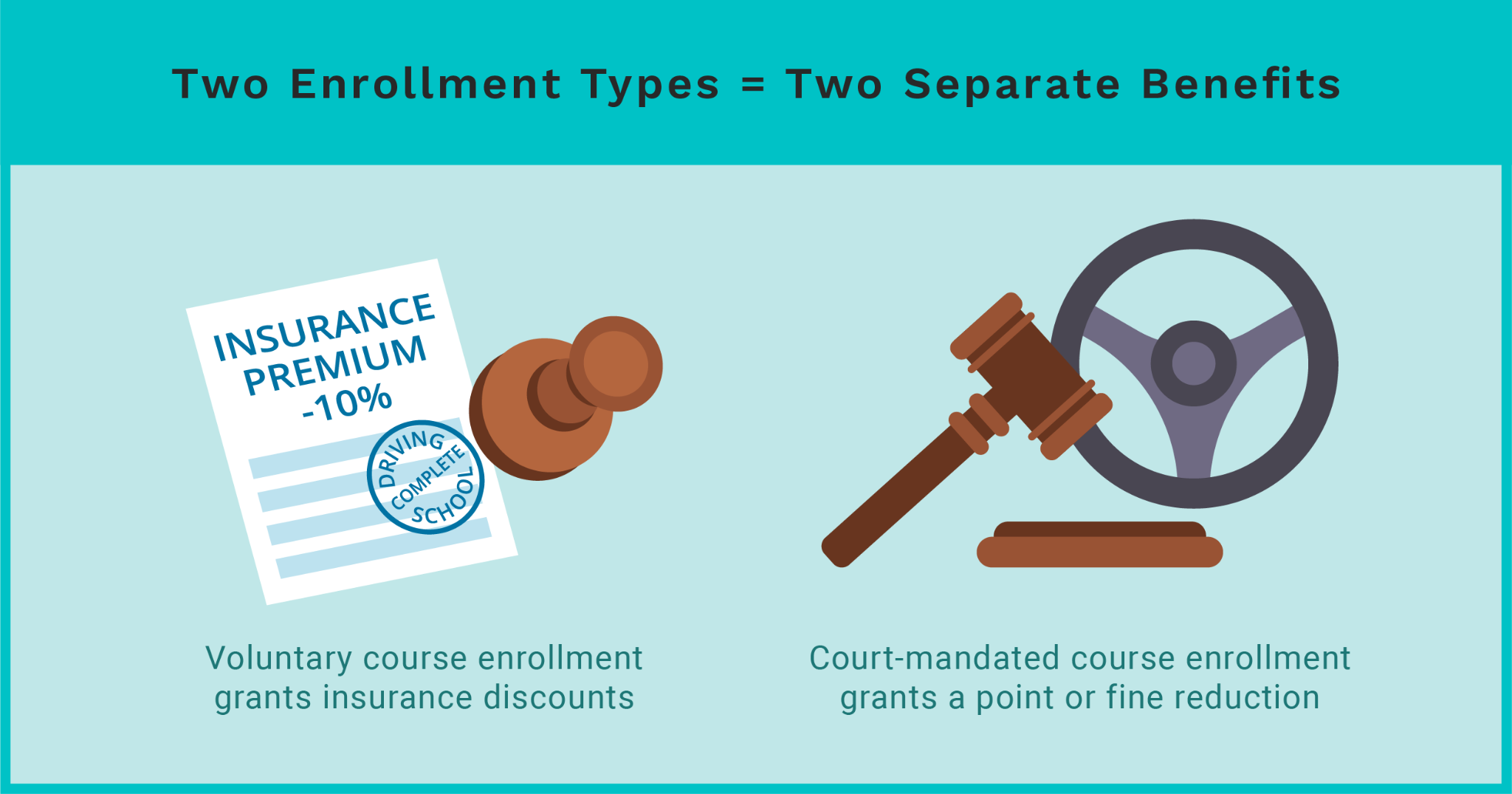
- Voluntary versus court-ordered completion: Generally, drivers who complete a defensive driving course to reduce their point count, dismiss a traffic ticket, or fulfill a court order are ineligible for the insurance discount. In these cases, you may need to take a separate course voluntarily to trigger the premium reduction, depending on your state’s rules.
To put those numbers in perspective, here’s what a defensive driving discount could save you at three different premium levels:
| Annual Premium | 5% Discount | 10% Discount | 20% Discount |
|---|---|---|---|
| $1,500 (low) | $75 per year $225 over 3 years | $150 per year $450 over 3 years | $300 per year $900 over 3 years |
| $2,434* (average) | $122 per year $365 over 3 years | $243 per year $730 over 3 years | $487 per year $1,460 over 3 years |
| $3,500 (high) | $175 per year $525 over 3 years | $350 per year $1,050 over 3 years | $700 per year $2,100 over 3 years |
The discount percentages above are national estimates. Your state’s laws, regulating authority, and course type can shift those numbers.
Below is a breakdown of what you can expect in the states served by Traffic Safety Institute (TSI), plus California and New York:
| State | Discount Range | Age Eligibility | Type of Course | Discount Duration | Course Accreditation Body |
|---|---|---|---|---|---|
| Texas | 2-10% | All ages | Driver safety / defensive driving course | Up to 3 years | Texas Department of Licensing and Regulation (TDLR) |
| Florida | 5-15% (mandated by law)* | 55+ | Mature driver improvement course | 3 years | Florida Department of Highway Safety and Motor Vehicles (FLHSMV) |
| California | 5-15% (mandated by law)** | 55+ | Mature driver improvement course | 3 years | California Department of Motor Vehicles (DMV) |
| Nevada | Up to 10% | Varies by insurer (many restrict to 50-55+) | Traffic safety school | Up to 3 years | Nevada DMV |
| Virginia | 5-10% *** | All ages (driver improvement clinic) 55+ (mature driver crash prevention) | Driver improvement clinic Mature driver crash prevention course (55+) | 2 years (under 55) 3 years (55+) | Virginia DMV |
| New York | 10% (mandated by law) | All ages | Point and Insurance Reduction Program (PIRP) | 3 years | New York DMV |
Your driving history comes into play, too. Drivers with few or no recent violations often qualify for greater discounts.
Say you’re 57 and live in Florida, where the average full-coverage premium is $3,289 per year. Completing a state-approved mature driver course could save you $164 to $493 per year, or $493 to $1,479 over a three-year period.
Do you qualify for a defensive driving insurance discount?
Many insurers offer discounts for completing a defensive driving course. However, certain factors can disqualify you or limit what you receive.
You’re likely eligible if:
✔ You voluntarily completed a state-approved defensive driving or mature driver course.
✔ You live in a state that mandates the discount (see the table above).
✔ You have a clean or near-clean driving record.
✔ You hold a standard personal auto insurance policy.
Take a 48-year-old driver in New York with a clean record and a standard auto policy. He takes a PIRP course voluntarily and then submits the completion certificate to his insurer. His $2,400 annual premium drops by 10%, saving him $240 a year, or $720 over three years.
You may not qualify for the discount if:
❌ You completed the course to dismiss a ticket or fulfill a court order. In that case, course completion typically counts for point reduction only.
❌ You already receive a safe-driver discount that conflicts with or replaces the defensive driving discount. However, insurance discounts are often cumulative—depending on your provider, you may qualify for more than one.
❌ You hold a commercial driver’s license (CDL). Most states exclude CDL holders from defensive driving courses and the associated insurance discount.
❌ You live in a state that doesn’t require insurers to offer a defensive driving discount.
When in doubt, call your insurer before you enroll. It’s a five-minute conversation that can save you from completing a course that won’t move your premium.
Defensive driving versus mature driver courses: What’s the difference?
Depending on your age, you can complete a defensive driving course or a mature driver course to lower your premiums. Both can lead to an insurance discount, but the rules that govern them are different.
The discount amount depends on your state’s laws and your insurance company. What differs between the two course types are the eligibility requirements and the course features, such as the topics covered, the minimum duration, and whether your state mandates that insurers honor the discount.
Here’s how they compare.
Defensive driving courses
Defensive driving courses are generally open to drivers of all ages. They cover hazard awareness, safe following distances, accident prevention, and related topics. For example, TSI’s Texas Driver Safety course focuses on Texas driving laws, how to handle emergencies on the road, and the factors that affect your ability to drive safely.
These programs follow a state‑mandated curriculum that runs between two and eight hours. In most states, completing the course can qualify you for an insurance discount or help you achieve a legal outcome, such as dismissing a ticket or reducing points.
Mature driver improvement courses
Mature driver courses are designed specifically for drivers aged 55 and older. They cover defensive driving strategies, but with a focus on the challenges associated with aging.
You’ll learn how to adjust your driving as reaction time slows, vision becomes less sharp, or hearing diminishes. Most courses also include practical tools and checklists to help you evaluate your driving abilities and choose safer times or conditions to be on the road.
California, Florida, and a few other states require insurance companies to offer a discount for completing a mature driver course. Besides the age requirement, you may need a clean driving record (e.g., no recent at-fault accidents, moving violations, or license suspensions) to qualify.
If you’re under 55, a defensive driving course is almost always the right choice. If you’re 55 or older, check your state’s requirements first. California and Florida require the mature driver course to secure the mandated discount, and a defensive driving program won’t substitute for it.
How to claim a defensive driving insurance discount
Completing the course is only half the job. You also need to make sure your certificate is recognized and accepted by your insurance provider. Here’s what to do to get the discount:
- Check with your insurance provider: Ask whether they offer a defensive driving or mature driver discount, which courses qualify, and how much you can save. Don’t assume the discount applies automatically. Even in states where insurers are required to offer it, the process and eligibility criteria vary by carrier.
- Enroll in a state-approved course: Choose a course accredited by your state’s regulatory agency. For example, our Texas Driver Safety course is licensed by the TDLR, while the Florida Mature Driver Improvement course has the FLHSMV’s seal of approval. If a course isn’t state‑approved, your insurer is unlikely to accept the certificate.
- Complete the course and get your certificate: Go through all the lessons and pass the quizzes or final exam. You’ll then receive a certificate of completion—usually delivered digitally by email, though some states require a physical copy.
- Submit the certificate to your insurer: Send the certificate by email or submit it in person, depending on your carrier’s policy. Ask for written confirmation that the discount has been applied, and check your next renewal statement to make sure it shows up.
The discount kicks in at your next policy renewal, not immediately after you submit the certificate. If your renewal is months away, ask your insurer whether they can apply it mid-term; some carriers will, some won’t.
Is a defensive driving course worth it?
A defensive driving course can benefit most drivers, but whether it’s worth paying for one depends on your goal.
If you’re aiming for an insurance discount, you’ll need a state‑approved defensive driving or mature driver course. Even then, the value depends on your specific situation.
A mature driver or defensive driving course is likely worth it if:
- You live in a state that mandates the discount (e.g., New York, Virginia, or Florida), and your insurer honors it—the savings are guaranteed by law.
- Your annual premium is high enough that even a 5% reduction translates into meaningful savings. On a $2,434 premium, a 10% discount saves you $730 over three years.
- You’re 55 or older and have a clean recent driving record. Completing a mature driver course can lock in a mandated multi-year discount in California, Florida, Virginia, and other states.
- The discount doesn’t conflict with another discount you already receive, such as a safe‑driver or telematics discount.
There are also cases where the course may not be worth it. Below are a few scenarios:
- You live in a state that doesn’t require insurers to apply the discount, and your carrier doesn’t offer it voluntarily.
- You’re already at your insurer’s lowest pricing tier, leaving little room for further savings.
- You’re taking the course to dismiss a ticket, keep points off your record, or fulfill a court order. In such cases, you may no longer qualify for the insurance discount unless you take a separate course voluntarily.
A defensive driving course pays off when the math, your state’s rules, and your insurer all line up. The best thing you can do is confirm your eligibility first.
FAQs about defensive driving and insurance discounts
Looking for more information? Here are answers to the questions drivers ask most about defensive driving courses and insurance discounts.
Does the defensive driving discount stack with other discounts?
Often, yes. Many insurers allow multiple discounts to apply to the same policy—safe driver, multi-car, bundling, and defensive driving can all coexist.
The exception is when a carrier applies a single “best available” discount in a category, which may cap what you receive. Ask your insurer specifically whether the defensive driving discount is additive or replaces another discount you already have.
Do I have to tell my insurer before I take a defensive driving course?
You don’t have to, but you should. Not every insurer offers a defensive driving or mature driver discount, and some only accept specific course providers. A quick call before you enroll confirms whether the discount is available to you and which courses qualify.
How often can I retake a defensive driving course for insurance savings?
Most insurers let you retake the course every three years, which matches the typical discount duration. A few allow retakes sooner, but only after the previous discount has expired.
Do I qualify for a defensive driving discount if I’ve had recent accidents or violations?
It depends on the insurer. Some carriers won’t apply the discount if you’ve had a recent at‑fault crash or major violation. Others still offer it but at a reduced percentage. Many insurers require a clean record for the past one to three years.
If I move to another state, does my discount transfer?
Generally, no. Discounts are tied to state rules and insurer policies. If you move, you’ll likely need to retake a course approved in your new state and confirm that your insurance provider honors the discount there.
This goes both ways. Taking a course approved in a different state may not qualify you for a discount where you currently live, even if the curriculum is identical.
Does a mature driver course count as a defensive driving course for insurance purposes?
Not always—and this distinction matters. In California and Florida, the insurance discount for drivers aged 55+ is tied specifically to the mature driver course. A standard defensive driving course won’t substitute for it. In New York and other states, a standard defensive driving course qualifies drivers of all ages for the discount.
Ready to lock in your insurance discount?
Saving on auto insurance doesn’t have to be complicated. If you’re based in Texas, you can take our TDLR‑approved Texas Driver Safety course to qualify for an insurance discount of up to 10% for three years.
Our defensive driving course is accepted by all Texas courts and most insurance providers. Once enrolled, you can complete it entirely online, at your own pace, in just six hours.
Log in from any device—phone, tablet, or computer—and pick up exactly where you left off. Finish in one sitting or spread it across several sessions. Either way, your progress saves automatically.
At TSI, we strive to deliver a smooth learning experience. That’s why our driving courses are built by passionate educators and designers. Expect clear explanations of real-world driving scenarios, key traffic rules, and the kind of content that holds your attention without wasting your time.
Here’s what you get:
✅ 100% online, self-paced lessons
✅ 12 easy-to-follow modules followed by quizzes
✅ English audio narration
✅ Save-and-resume from any device
✅ Free unlimited retakes
✅ Free instant digital certificate
✅ 24/7 live chat support in 100+ languages
With our Texas Driver Safety course, you don’t pay until you pass. Go through the lessons, complete the quizzes, and enter your payment details only when you’re done. Then download your certificate and submit it to your insurer to claim the discount.
Our flat fee of only $27.99 covers everything you need. We do offer optional add-ons like a physical certificate and expedited shipping, but these are clearly listed at checkout and can be removed with a single click.
Don’t pay more for auto insurance than you have to. Start our Texas Driver Safety course for free today.